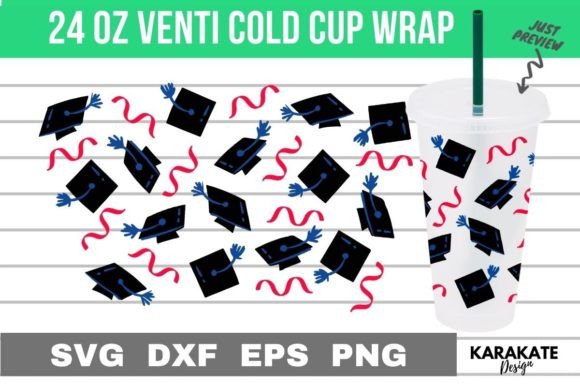
Graduation Cap, 24 Oz Venti Cup Wrap
A Designer’s First Glance: Clean, Cheerful, and Immediately Recognizable
When I opened the Graduation Cap, 24 Oz Venti Cup Wrap files, my first thought wasn’t “cute” or “trendy”—it was “this will read clearly at 3 inches wide on a tote bag.” That’s the kind of practical clarity every embroidery designer hopes for. The cap sits centered with subtle dimension—no overdone shadows or excessive detail—and the tassel hangs with just enough swing to suggest motion without risking stitch distortion. It’s not overly stylized, which means it avoids looking dated in six months. As a Crafts-focused design, it leans into warmth and celebration without leaning too hard into kitsch. For Etsy sellers preparing graduation-themed bundles—or small shop owners stocking boutique baby onesies or teacher appreciation gifts—this isn’t filler. It’s a reliable visual anchor.
How It Translates to Real Embroidery Projects
I tested Graduation Cap, 24 Oz Venti Cup Wrap across three real-world uses: a cotton twill apron for a local school fundraiser, a lightweight unisex sweatshirt for a grad party favor, and a linen tea towel for a handmade gift set. On the apron, the clean lines held up beautifully with medium-density fill stitch—no puckering, no thread nesting. On the sweatshirt, I paired it with a light tear-away stabilizer and found the satin-stitched cap brim stayed crisp even over the fabric’s slight nap. The tea towel version surprised me most: because the design avoids tight interior corners or micro-details, it stitched cleanly on loosely woven linen without requiring extra underlay or reduced speed.
This is where Graduation Cap, 24 Oz Venti Cup Wrap earns its keep as a Graphics asset—it’s *designed to translate*, not just look sharp on screen. Unlike some digital embroidery files that collapse when scaled down to 2.5”, this one retains legibility. That makes it ideal for embroidered patches, cap front placements, or even tiny pillow covers for nursery decor. I wouldn’t push it below 2”, but between 2.5” and 4”, it performs consistently across custom apparel, personalized gifts, and small business merchandise.
Where to Proceed With Intention
It’s not magic—and no embroidery file is. Graduation Cap, 24 Oz Venti Cup Wrap works best on stable, medium-weight fabrics. On thin jersey or highly stretchy knits, I’d add cutaway stabilizer behind the hoop and reduce stitch density slightly in the cap’s fill areas. Curved surfaces like baseball caps need careful hooping: test placement on scrap first, especially if stitching near the seam ridge. And while the tassel reads well in thread, avoid ultra-fine metallics—stick with standard 40-weight poly or rayon for durability and sheen balance.
Dark fabric? No problem—but check contrast in your mockups. I ran black-on-navy and white-on-charcoal versions; both worked, but the white needed a touch more underlay for opacity. Also: though the PNG includes a transparent background (great for printable mockups), remember that transparency doesn’t equal embroidery readiness. Always verify stitch order and jump thread paths in your embroidery software before sending to machine.
What It Adds to Your Finished Product—Beyond the Stitch
Customers don’t buy stitches—they buy meaning, polish, and trust. Graduation Cap, 24 Oz Venti Cup Wrap delivers all three when used intentionally. On a personalized tote bag, it signals celebration without shouting. On a baby onesie, it feels thoughtful—not generic. For craft fair shoppers or Etsy buyers scanning dozens of listings, that quiet confidence builds credibility fast. It also supports brand consistency: whether you’re selling graduation-themed digital embroidery files or physical embroidered patches, this design fits seamlessly into a cohesive collection.
And yes—it boosts giftability. A hand-embroidered kitchen towel with this motif feels special but not fussy. A custom sweatshirt with clean, balanced stitching reads professional, not DIY-in-a-rush. That perception matters, especially for creative entrepreneurs pricing their time fairly and building repeat customers.
Practical Notes Every Embroiderer Should Run Through
- Always test on scrap fabric first—especially if using textured or dark materials.
- Check thread color contrast before stitching the final piece; soft pastels may fade on light backgrounds.
- Review stitch density in your editing software—look for any unintentionally dense clusters that could cause stiffness or fabric distortion.
- Confirm hoop size compatibility; the design scales well, but double-check your smallest hoop before digitizing for tiny placements.
- Inspect small details like tassel tip definition—if your machine struggles with fine running stitch, consider simplifying that element manually.
- Test in black-and-white mockups to assess value contrast and visual weight apart from color.
- Use proper stabilizer for your fabric type—lightweight cutaway for knits, tear-away for stable wovens.
- Verify licensing terms before selling finished items or bundling the digital embroidery file—this affects Etsy sellers and craft business owners directly.
Final Thought: A Quietly Versatile Workhorse
Graduation Cap, 24 Oz Venti Cup Wrap won’t stop traffic—but it will earn nods of recognition, spark smiles at graduation parties, and hold up after repeated washing on a favorite sweatshirt. It’s the kind of embroidery file that disappears into the product just enough to feel intentional, yet stays distinct enough to carry meaning. For designers, makers, and small shop owners who value reliability over flash, it’s less of a “design” and more of a trusted tool. Use it thoughtfully, test it honestly, and let it do what it does best: celebrate milestones, quietly and well.