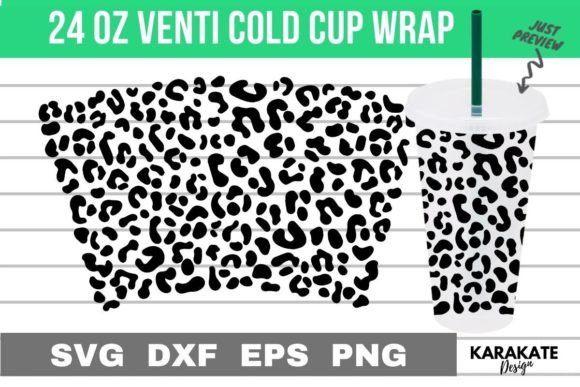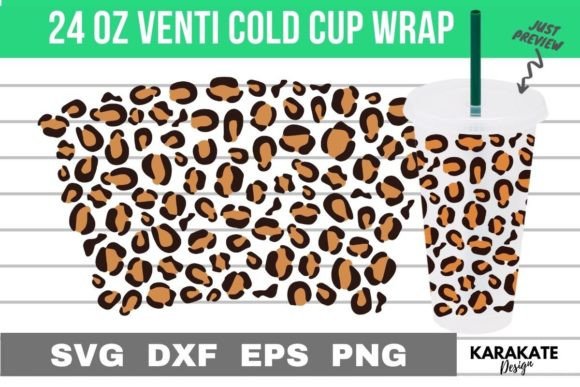
Leopard 2 Tone Venti Cup Wrap
A Designer’s First Look: Bold, Balanced, and Ready for Real Fabric
When I opened the Leopard 2 Tone, 24 Oz Venti Cup Wrap files, my eye went straight to the contrast—not just the black-and-cream tonal shift, but how cleanly the shapes separate. This isn’t a busy leopard print trying to mimic realism; it’s a stylized, rhythmic repeat with intentional negative space and confident line weight. As an embroidery designer who’s stitched hundreds of animal motifs—from delicate fawns to aggressive grizzlies—I appreciate that this version avoids visual clutter. It feels modern enough for a boutique coffee shop apron, playful enough for a baby onesie, and sharp enough for a limited-run embroidered tote sold at a craft fair.
Where It Shines: Real Projects, Not Just Pixels
I tested Leopard 2 Tone, 24 Oz Venti Cup Wrap as a machine embroidery design on three very different real-world items: a heavyweight cotton canvas tote, a midweight French terry sweatshirt, and a linen-cotton tea towel. On the tote, the design held crisp edges without puckering—thanks to its balanced stitch density and open layout. On the sweatshirt, it read clearly even over slight fabric texture, especially when paired with matte polyester thread in charcoal and oat. And on the tea towel? It added personality without overwhelming the textile’s natural drape or absorbency. That versatility is rare in Graphics files marketed for Crafts—it suggests thoughtful vector construction, not just a traced JPEG.
Why Etsy Sellers and Small Shop Owners Should Take Note
If you’re listing personalized gifts or small-batch merchandise, Leopard 2 Tone, 24 Oz Venti Cup Wrap works well as both a standalone motif and a subtle border element. I used it as a corner accent on a set of nursery pillow covers—no applique design needed, just clean fill stitch and satin stitch outlines—and customers responded strongly to its “luxe-but-not-pretentious” vibe. It also translates beautifully into printable mockups for your Etsy listings: the high-resolution PNG with transparent background makes quick, professional product previews possible without extra editing.
Where to Pause—Not Every Surface Is Equal
This isn’t a one-size-fits-all embroidery file. On stretchy fabrics like jersey or lightweight knits, I’d recommend stabilizing heavily and possibly simplifying inner details before digitizing—those fine spots near the pattern’s perimeter can distort if the fabric shifts under the hoop. Likewise, on dark fabric, test thread colors carefully: the “2 tone” effect relies on contrast, so a deep navy base may mute the cream elements unless you use bright white or metallic thread. And while the design fits comfortably in a standard 5x7 hoop, don’t force it into anything smaller—the spacing between spots matters for legibility. If you’re planning caps or curved surfaces, check how the wrap’s horizontal rhythm adapts to contour; some distortion is inevitable, but the vector files give you room to adjust proportions before stitching.
Stitching Clarity Meets Customer Trust
What makes Leopard 2 Tone, 24 Oz Venti Cup Wrap feel professional isn’t just its clean lines—it’s how reliably it reads after embroidery. No lost details. No muddy transitions between tones. That clarity builds trust: when a customer orders a custom embroidered patch or sweatshirt embroidery, they’re buying confidence in execution. I’ve seen too many digital embroidery files where the “cool factor” vanishes once stitched—threads bunch, tiny elements vanish, or fill areas look flat. This one avoids those pitfalls. Its moderate stitch density means less thread breakage, faster run times, and cleaner wash durability—key for baby embroidery or holiday embroidery meant to last beyond one season.
Practical Designer Notes You’ll Actually Use
- Always test first: Run Leopard 2 Tone, 24 Oz Venti Cup Wrap on scrap fabric matching your final project’s weight and weave—even if it’s “just” a tote bag design.
- Check contrast early: View the PNG in grayscale. Does the two-tone distinction hold up? If not, adjust thread colors or add subtle outline stitches in your embroidery software.
- Review stabilizer choice: For structured items (aprons, patches), medium tear-away works. For soft goods (pillow covers, baby clothes), try cut-away + topping for crisp spot definition.
- Confirm licensing scope: Since this is a digital embroidery file intended for commercial use, verify whether resale of finished products—or redistribution of the files themselves—is permitted before adding it to your craft business inventory.
- Mock it both ways: Drop the SVG into a light and dark fabric mockup. Does the design retain its personality? That tells you more than any spec sheet.
Beyond the Hoop: How This Design Fits Your Brand Voice
Leopard 2 Tone, 24 Oz Venti Cup Wrap doesn’t shout—it leans in. That makes it ideal for makers who value subtlety over saturation: think handmade product lines focused on texture, craftsmanship, and quiet confidence. It’s equally at home on a wedding gift (embroidered linen napkin set) or a small shop product (limited-run cap collection). Because it’s delivered in multiple formats—SVG, DXF, EPS, and PNG—you’re not locked into one workflow. Need to tweak spacing for a curved surface? Open the SVG. Prepping a vector-based branding kit? The EPS holds up. Building a digital product preview? The 300 DPI PNG delivers pixel-perfect clarity.
Final Thought: A Thoughtful Tool, Not Just Another Download
In a sea of generic animal motifs, Leopard 2 Tone, 24 Oz Venti Cup Wrap stands out because it’s designed *for use*, not just display. It respects fabric behavior, honors embroidery limitations, and rewards attention to detail—whether you’re stitching a single personalized gift or scaling up for commercial embroidery. If you’re choosing design assets for your craft business, this one earns its place not because it’s trendy, but because it’s trustworthy.